
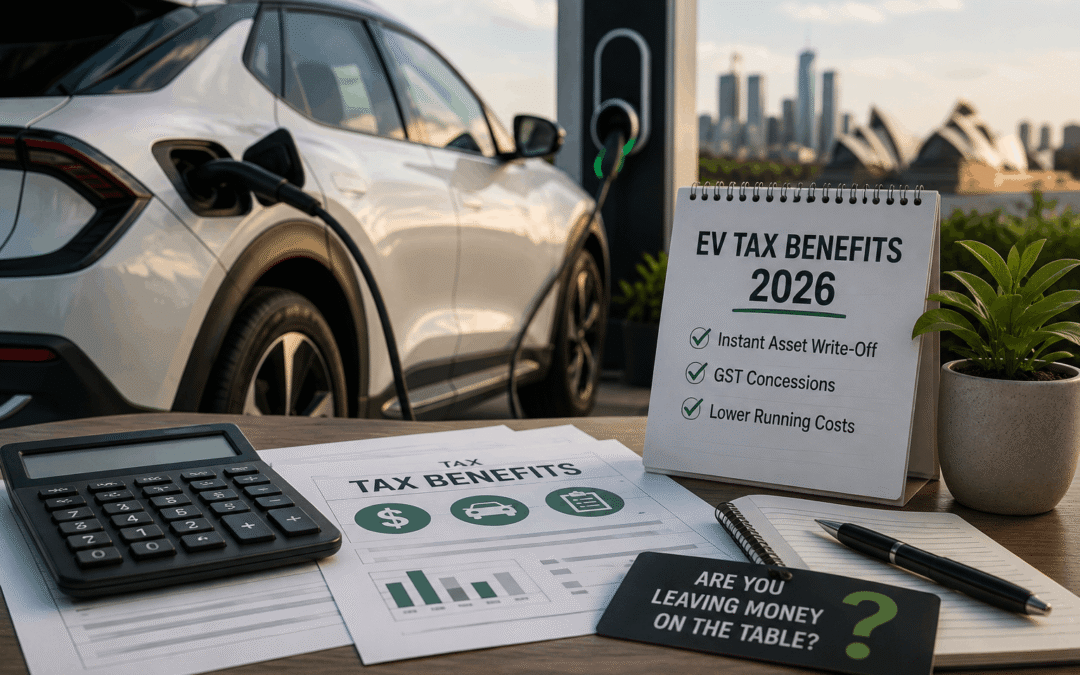
Financing your first EV in Australia is simpler than you think, and surprisingly, far more affordable. A chattel mortgage lets businesses claim the full cost as a tax deduction, a novated lease lets employees salary-sacrifice their EV with zero Fringe Benefits Tax, and personal EV loans are available with same-day approval. Read this guide to learn every option, what each one costs in real terms, and how VOXFIN helps you make the switch.
The Running Cost Argument: Why Does the Electric Vehicle Often Win Over Time?
Vehicle finance repayments are only part of the picture. The total cost of owning an EV in Australia is increasingly competitive with petrol, and for high-mileage drivers and businesses, the numbers clearly favour electric vehicles.
Petrol Vehicles | Electric Vehicles | |
Fuel cost per 100km | ~$14–$18 (petrol) | ~$2–$4 (home charging) |
Scheduled servicing | Every 10,000–15,000km | Less frequent – no oil changes |
Registration | Standard | Discounts in VIC, NSW, ACT |
FBT (employer-provided) | Applies at 20% of car value | Zero for eligible EVs |
Instant asset write-off | Available if under threshold | Available if under threshold |
Resale trajectory | Established market | Improving as used EV market grows |
Electric vehicles are no longer a niche decision. For many Australians, it’s the smarter financial one.
EV sales in Australia have grown sharply over the past two years, and the most common question I’m now fielding is not ‘Should I go for an electric vehicle?’ Most people have already made that decision. It’s ‘how do I actually pay for it?’ The good news is that financing an EV in Australia is not complicated. Three clear pathways depend on whether you’re buying as an individual, a business owner, or an employee. Each one comes with a specific tax benefit that most people don’t fully understand until a broker explains it. This guide covers all three.
What Are the Best Ways to Finance an EV in Australia?
Your best option depends on your employment situation, whether you run a business, and how you want to structure the repayments.
1. Chattel Mortgage: For Business Owners and Self-Employed
A chattel mortgage is the most tax-efficient option for sole traders and companies buying an EV for business use. You own the vehicle from day one, and the lender takes a mortgage over the asset as security.
- Claim the full GST on the purchase price in your next BAS – immediately, upfront
- Claim depreciation on the vehicle’s value as a business expense each year
- Claim the interest component of your monthly repayments as a tax deduction
- If the EV qualifies under the instant asset write-off threshold, potentially write off the full cost in the year of purchase
2. Novated Lease – For Employees Wanting to Salary Sacrifice
A novated lease is an arrangement between you, your employer, and a finance company. Your employer deducts lease payments from your pre-tax salary, reducing your taxable income, and for EVs, the FBT exemption means no additional tax liability on the benefit.
- Pay for your EV with pre-tax dollars – effectively reducing your income tax bill
- Zero FBT on eligible battery electric vehicles under the LCT threshold – a benefit that does not apply to petrol, standard hybrid, or most plug-in hybrid vehicles.
- Running costs – fuel (charging), insurance, registration, servicing can also be bundled into the lease and paid from pre-tax salary
- At the end of the lease term, you can purchase the vehicle for the residual value, refinance, or upgrade
3. Personal EV Loan – For Individuals Buying Outside of Work
If you’re buying an EV as an individual for personal use, not through a business or employer arrangement, a personal secured vehicle loan is the most straightforward path. These work the same way as any standard car loan: fixed repayments over a set term, with the vehicle as security.
- Loan terms typically 1-7 years with fixed or variable rate options
- Secured against the vehicle generally delivers a lower rate than an unsecured personal loan
- No tax benefits for private buyers, but the financing itself frees up cash for other uses
- Some lenders offer green car loan rates – a discounted rate specifically for EVs worth comparing
Not Sure Which EV Finance Option Fits Your Situation?
VOXFIN’s asset finance brokers compare chattel mortgages, novated leases, and personal EV loans across 40+ lenders and identify which structure saves you the most based on your income, employment type, and the vehicle you’re buying.
Book your free consultation now!
Is It Better to Finance an EV or Buy in Cash?
The instinct for many first-time EV buyers is to save up and pay outright. It feels cleaner. But when you run the numbers, financing an EV, particularly for business owners and employees, often yields a better financial outcome than a cash purchase.
Here’s the core reason: several EV finance structures in Australia allow you to claim tax deductions on the vehicle’s cost in a way that a cash purchase simply doesn’t replicate. For business owners, a chattel mortgage allows you to claim depreciation and interest as business expenses. For employees, a novated lease lets you pay for the car from pre-tax salary and, as of 2022, EVs under the Luxury Car Tax threshold are completely exempt from Fringe Benefits Tax.
The FBT Exemption: Eligible EVs under $91,387 (2025-26 LCT threshold) provided through a novated lease or employer arrangement attract zero Fringe Benefits Tax. This is a federal government incentive designed to accelerate EV adoption, and it makes a significant difference to the real monthly cost for employees.
5 Practical Things to Know Before You Finance Your First EV
- Check the Luxury Car Tax threshold for FBT purposes
- Confirm your employer participates in novated leasing before you plan around it; not all employers offer this. If yours doesn’t, a chattel mortgage or personal loan is your next option.
- Factor in home charging installation; a standard home EV charger costs $800–$2,000 installed. Business owners can claim this as a separate deductible expense. Ask your broker about bundling it into the finance package.
- Consider the full term carefully; EV technology is improving rapidly.
- Green loan rates are worth asking about, as several lenders offer a discounted rate for EVs
Ready to Make the Switch? Here’s Where to Start.
The switch to electric is a financial decision as much as an environmental one, and the finance structure you choose has a bigger impact on your real cost than most people realise. Getting that structure right from the start is what VOXFIN does.
Whether you’re a business owner wanting to claim every available deduction, an employee exploring novated leasing, or an individual simply ready to drive electric without the upfront stress – we’ll find the right product, structure, and lender for your situation.
VOXFIN compares EV finance options across 40+ lenders – chattel mortgages, novated leases, and personal vehicle loans. We’ll tell you exactly what your monthly repayment looks like and which structure saves you the most. No upfront cost.
Frequently Asked Questions
What is the best way I can finance my EV in Australia?
The best way to finance an electric vehicle in Australia depends on your situation.
- If you’re a business owner or a self-employed ABN holder, you will benefit most from a chattel mortgage. This will allow you to claim GST, depreciation on the vehicle, and deduct interest as a business expense.
- Employees can access significant savings through a novated lease with salary sacrifice, particularly given the FBT exemption for eligible EVs under $91,387.
- Private individuals purchasing an EV outside of work typically use a secured personal car loan or a green car loan offering a discounted rate.
Are there any government incentives for buying an electric vehicle in Australia in 2026?
Yes, several Australian government incentives apply to electric vehicle purchases in 2026. At the federal level, the FBT exemption for eligible EVs under the Luxury Car Tax threshold is the most significant benefit, saving employees thousands of dollars per year when combined with a novated lease. The instant asset write-off allows eligible small businesses to immediately deduct qualifying EV purchases under $20,000. At the state level, Victoria, New South Wales, and the ACT offer registration fee discounts or exemptions for EVs, and stamp duty exemptions on EV purchases apply in some states. Incentives change regularly; VOXFIN confirms the current applicable benefits in your state before you purchase.
How long does it take to get EV finance approved in Australia?
EV finance approval in Australia through VOXFIN typically takes 24-48 hours for straightforward applications. For a chattel mortgage or personal vehicle loan where the applicant has a clear employment or income record and a confirmed vehicle – make, model, and purchase price – many lenders can issue formal approval within one business day. Self-employed applicants or those using low doc income evidence may take 2-3 business days, depending on the lender and the quality of documentation provided. Once finance is approved, settlement is typically arranged directly with the dealer within a few days. VOXFIN manages the full process from application to settlement, so you’re not chasing paperwork across multiple parties.
Is there an FBT exemption for electric vehicles in Australia in 2026?
Yes, eligible electric vehicles provided through a novated lease or employer arrangement can be exempt from Fringe Benefits Tax (FBT) in Australia, provided they meet the applicable eligibility requirements and the Luxury Car Tax threshold. The exemption applies to eligible battery electric vehicles. From 1 April 2025, plug-in hybrid electric vehicles (PHEVs) are generally no longer eligible, except where qualifying transitional arrangements were already in place before that date.
Can I claim an electric vehicle as a tax deduction for my business?
Yes, an electric vehicle purchased or financed for genuine business use is a depreciating asset and is tax-deductible in Australia. Under a chattel mortgage, the business can claim GST on the purchase price upfront, depreciate the vehicle’s value as a business expense each year, and deduct the interest component of loan repayments. If the EV’s cost is under the instant asset write-off threshold applicable in the year of purchase, the full cost may be deductible in a single year rather than over the vehicle’s effective life. VOXFIN structures EV chattel mortgages to maximise the tax position in the first year, which is particularly valuable for businesses with a strong profit year they want to offset.
VOXFIN compares EV loans, chattel mortgages, and novated lease options from 40+ lenders. We’ll find the right structure for your situation and have you approved fast.

