

The 2026 Australian lending shift has created three distinct opportunities: regional property buyers are getting 0.3-0.5% rate discounts; self-employed borrowers are approving in 5 days via low-doc products instead of waiting 12 months; and refinancers are saving $3,600-6,000/year by switching product types rather than just lenders. Here’s how to identify which strategy applies to you.
Australia’s lending landscape has changed. Traditional banks are tightening criteria on standard home loans, but borrowers with a strategy are winning through specialist lenders. In the last six months, we’ve seen first-home buyers securing better rates in regional property, investors layering construction and development loans, self-employed borrowers approving in five days via low-doc products, and refinancers saving thousands annually by switching product types, not just lenders.
This guide covers every option, what each one costs, and how VOXFIN helps you find the right fit.
However, specialist lenders have stepped in – and borrowers who understand the new landscape are getting ahead.
In the past six months, we’ve seen:
- first‑home buyers securing better rates in regional markets
- investors stacking land + construction finance for development
- self‑employed borrowers approving in five days via low‑doc lending
- refinancers saving thousands annually by switching product types, not just lenders
This guide breaks down every opportunity, what each one costs, and how VOXFIN helps you choose the right strategy.
What Changed in 2026?
The RBA has recently raised the rate again to 4.60%, but the real story is how lenders responded.
Big banks tightened:
- Higher debt‑to‑income requirements
- Stricter investment property criteria
- Investment property loans faced higher rates and deposit requirements
But here’s the opportunity: Specialist lenders stepped in.
In over a decade of placing construction financing and investment finance across Australia, we’ve watched the pattern repeat. Borrowers get declined not because they can’t afford the loan, but because the big bank template wasn’t designed for how their situation actually works.
A soil consultant earning $180,000 across nine months looks, on paper, like someone earning almost nothing. A contractor with project-based income faces the same problem. A farmer with seasonal revenue gets tested on the lowest three months, not the full year. The borrower hasn’t done anything wrong. The lender’s template is simply the wrong tool.
If you’ve been declined, or you haven’t applied because you assumed the answer would be no, this guide is for you.

First-Home Buyers and Investors
1. First-Home Buyers: Regional Is the Play
Old strategy
$750k apartment in capital city, 10 to 20% deposit, competition from 100+ other buyers
New strategy
$450k regional house, 5 to 20% deposit, relatively lower competition rate.
First-home buyer loan programs now actively incentivise regional purchases.
- State-based first-home buyer grants (NSW, VIC, QLD all stepping up)
Who’s winning?
Buyers open to going further into regional parts are closing 3 weeks faster and saving $40-60k. We’ve placed many Australians in regional parts of Australia for even first-home buyers and for investment.
2. Investors: The Development Play
Smart investors aren’t buying and holding residential properties anymore. They’re buying development-ready land, securing construction financing, building units, and either cashing out or holding for yield.
Investment property loans are getting squeezed because big banks assess development risk poorly. They underwrite for yield on existing properties, not development potential on vacant land. Specialist lenders assess development value where standard banks see only risk.
The combo strategy is open.
- Land purchase with investment property loan
- Layer construction financing on top for the build
- Convert to investment property loan post-completion
Result
Lower effective rate than one blended loan, plus flexibility. We’ve structured a decent number of development deals this way ; average rate savings: 0.35% compared to a single blended loan.

3. Self-Employed Borrowers: The Low-Doc Home Loans Boom
Self-employed borrowers are winning in 2026. Traditional lenders decline you. Low-doc loans approve you in a few days.
Standard lenders test seasonal income wrong. Big bank templates assume consistent monthly deposits. But a tradesperson, consultant, or contractor doesn’t work that way. BAS statements show the ATO has verified your income. Bank statements show actual cash movement. Low-doc lenders use these instead of tax returns.
What’s changed?
- Low-doc home loans: 0.3-0.5% above standard (skip the tax return proof)
- Low-doc construction loans: 0.75 to 1.25% above standard (same trade-off)
- Low-doc business loans: 1.25 to 2% above standard (risk premium for income assessment)
The math
Waiting 12 months for your tax return to “look good” costs more than the rate premium. On a 166/month extra. Apply now, you’re building in your home in 5 weeks. Wait 12 months, you’re still renting.
Requirements
- 2+ years ABN registration
- Last 2 BAS statements or 12 months bank statements
- Licensed builder (if construction) or solid business plan (if business loan)
Who’s winning?
Tradespeople, consultants, contractors who’d been rejected by big banks. Now approving in few days. In 2025, Many Australians self-employed borrowers secured low-doc loans through our panel – average approval time: 4.8 days.
4. Refinancing From 6.3%+ Mortgages
2-3 million Australians are on home loans locked at 6.5-7.2%. Current rates: 5.99 -6.10%.
Most people refinance incorrectly .
Standard refinancing saves $1,800/year.
Smart Refinancing (product-type switching) saves $3,600-6,000/year. The difference is which loan type you switch to, not just which lender.
Smart refinancing approaches
Home loan refinancing: Standard move. Saves $150/month.
Investment property loan refinancing: If your IP is on 7.2%, refinance to 5.9-6.2%. Saves $200-400/month.
Construction loan conversion: Near the end of build? Convert to a home loan at 5.9%, lock your rate, build equity immediately.
Low-doc refinancing: Rejected by standard refinancing? Low-doc home loans assess actual deposits/BAS. Approve in 5 days.
Business loan refinancing: High-rate business loan? Refinance to low-doc business loan at 6.5-7.5%. Saves $200-500/month.
The gap is this: Standard banks use one template. Specialist lenders use the right tool for your situation. A standard bank might refuse to refinance your investment property because your loan size is under their minimum. A specialist lender has an offering for that exact size. Same rate, different pathway.
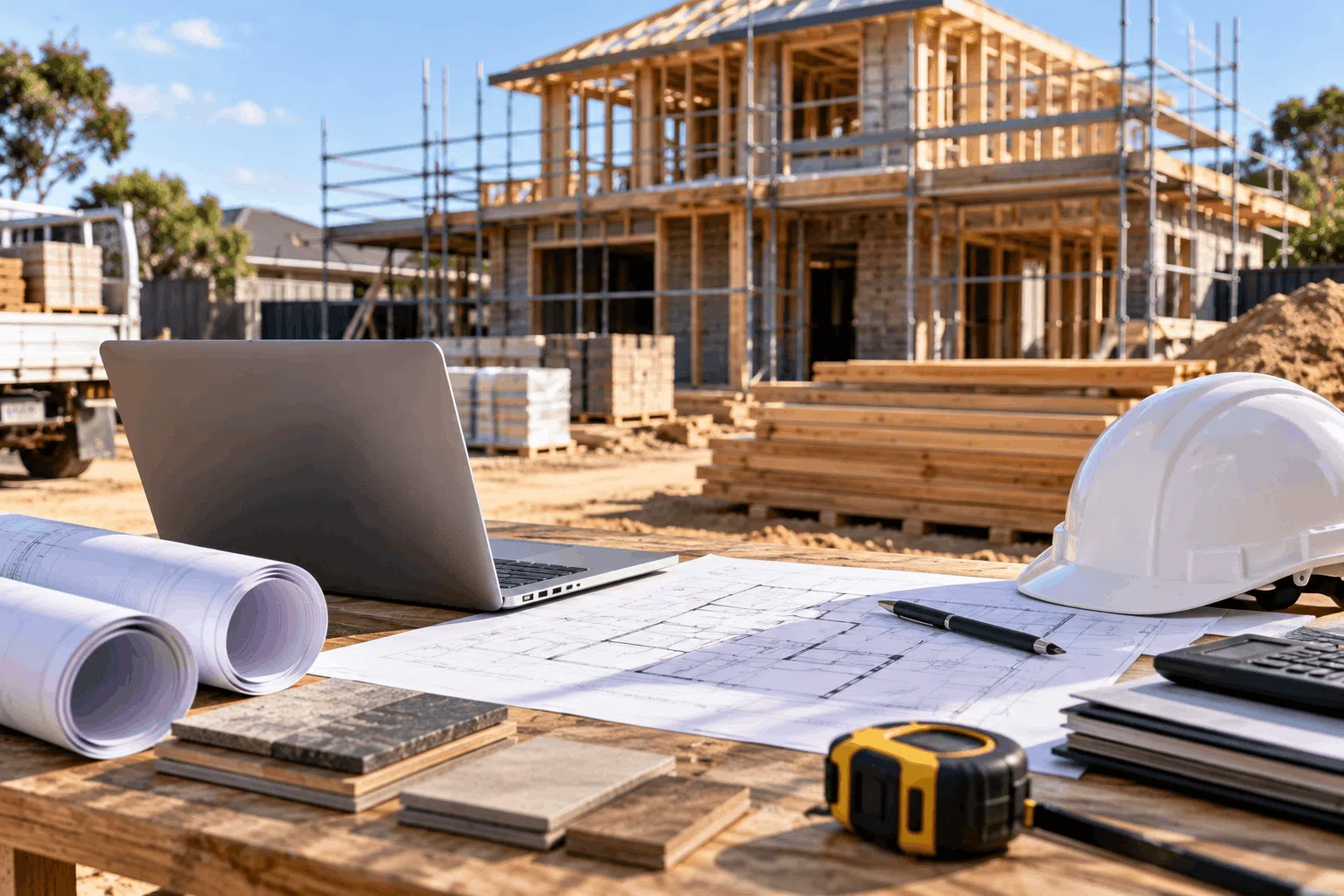
Builders, Renovators, Business Owners
1. Construction vs. home loan renovation
Construction loans for-
- Projects $250k+
- Licensed, fixed-price builder
- 12+ month timeline
- Staged funding tied to milestones
Home loan renovation packages for:
- Projects under $150k
- Design-build contractors (not formal builders)
- Under 6-month timeline
- Simplicity (one loan, one rate)
The product you choose determines the rate, the term, and the tax outcome. A $300k renovation on a $600k property might be better served by a home loan top-up (keeping your primary rate) rather than a separate construction loan (paying a premium).
2. Business expansion financing
If you’re running a growing business, you likely need multiple tools, not one loan. Each serves a different purpose and comes with a different rate. Forcing everything into one business loan means paying a premium on assets that qualify for cheaper finance.
- Low-doc business loans: Working capital, fast (5-10 days)
- Equipment finance: Machinery/vehicles, lowest rate for those specific assets
- Construction loans: New office/headquarters with licensed builder
- SMSF loans: If building via self-managed super fund
Who’s winning?
Business owners stacking multiple financing tools at optimal rates, not forcing everything into one product. In 2025, our clients who used this approach saved 1.2% on average across their financing suite compared to taking one blended loan.
Your Next Step
First-home buyer? This is especially valuable if you’re open to regional property.
Compare First-Home Buyer Loan Options
Investor or builder?
Explore Construction + Investment Loan Combinations
Self-employed?
Check Your Low-Doc Loan Options
Refinancing from 6%+? You might save $300–500/month.
Get a Full Refinancing Analysis
Expanding your business?
Get a Custom Business Expansion Plan
Frequently Asked Questions
Is now a good time to refinance?
Yes, if your current rate is 6.3%+. Compare savings against switching costs using our refinancing calculator to verify the financial case before committing. Most borrowers break even in 18-24 months.
Can I get a home loan as a self-employed person?
Absolutely. Low-doc home loans assess self-employed income via BAS statements and bank statements instead of tax returns. With 2+ years ABN history, approval typically takes 5 business days. No need to wait for tax season.
What’s the difference between construction loans and home loans?
Construction loans fund in stages tied to building milestones (slab, frame, lock-up, completion). Home loans fund upfront. Our full comparison explains which suits your project timeline and cash flow.
Should I invest in residential or do development?
Depends on capital, risk tolerance, and timeline. Explore investment property strategies or development financing options to decide which aligns with your goals and exit strategy.
Can I refinance a construction loan?
Yes. Most construction loan conversions happen post-completion, converting to home loans or investment property loans. This locks your rate now and builds equity immediately post-build.
What if I have a non-standard situation?
There’s a loan type for it. Talk to a specialist – we handle recent business owner loans, low-deposit home loans, irregular income loans, and more niche scenarios daily.
The Bottom Line
The 2026 lending market isn’t about getting the best home loan. It’s about getting the right product for your situation. You don’t have to accept a ‘no’ from a big bank as your final answer. Big banks offer one thing: standard home loans.
We compare 13+: home loans, investment property loans, construction loans, low-doc home loans, low-doc construction loans, low-doc business loans, business loans, equipment finance, refinancing, development loans, SMSF loans, first-home buyer loans, and more.
The window is open. Rates won’t stay this good forever.
VOXFIN’s lending specialists compare home loans, construction loans, and refinancing options across 40+ lenders. No upfront cost. No obligation. We’re paid by lenders once you’re approved, never upfront from you.

